

Key Takeaways
- Alcohol use is the leading cause of fatal boat accidents, contributing to 20% of all deaths in 2024.
- Falling overboard and capsizing are the deadliest types of boating accidents, with drowning being the primary cause of death.
- Open motorboats, canoes, and kayaks pose the highest risk for fatal accidents.
As summertime approaches, more and more people will take to the lakes and other waterways in California and Nevada. Boating in these parts is not just an occasional pastime; for some, no spring or summer season is complete without getting out on the water as often as possible.
While a day out on the water can represent freedom, adventure, and good times, it’s important not to forget the many dangers involved in boating. Knowing how most fatal boating accidents happen and what types of boats are the most risky can help you ensure a safe outing on the water.
How Common Are Fatal Boating Accidents in the United States?
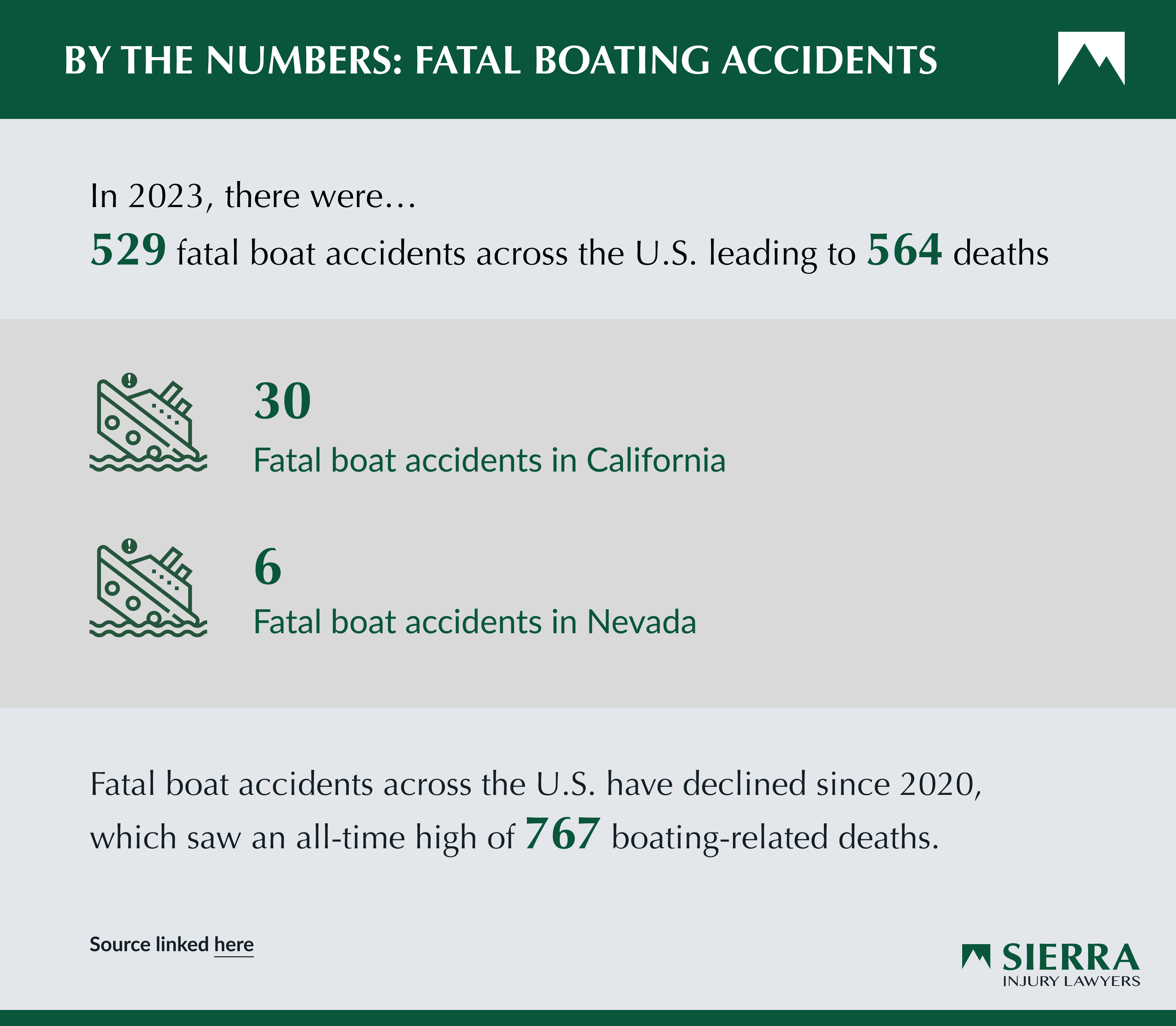
According to the latest data from the United States Coast Guard’s recreational boating accident statistics report, there were 495 fatal boating accidents across the U.S. in 2024, resulting in a total of 556 deaths. While this number is all too high, there is some good news in that 2024 saw the lowest number of deaths on record, which dates all the way back to 2005.
State-specific data also reveals insights. For example, in 2024, California saw 38 fatal accidents, resulting in a total of 45 deaths. Sadly, this was the highest number of fatalities recorded since 2017. Meanwhile, in Nevada, there were four fatal accidents leading to four deaths.
These boating accident statistics are interesting, but they’re not just numbers; they’re tragedies that can hit close to home. For instance, just last year, Lake Tahoe saw a devastating accident in which 8 victims were killed.
How Do Fatal Boat Accidents Happen?
Data from the USCG shows that the top cause of boating fatalities is alcohol use, which was the primary contributing factor in 20% of all boating deaths in 2024. Consuming alcohol while out on the water is dangerous for boat operators and passengers alike. Passengers may take unnecessary risks, such as moving carelessly around an unstable vessel. On the other hand, intoxicated operators may speed, make unsafe maneuvers, or fail to see dangers in the water. All of these can lead to a person falling into the water.
Statistics show that most boating deaths (76%) are caused by drowning, and it isn’t just a risk for those who are under the influence. Even individuals who are sober and good swimmers can drown. Falling into cold water can shock the body, resulting in a sort of paralysis that makes it difficult for someone to save themselves. Victims who are struggling to stay afloat may not be able to call for help.
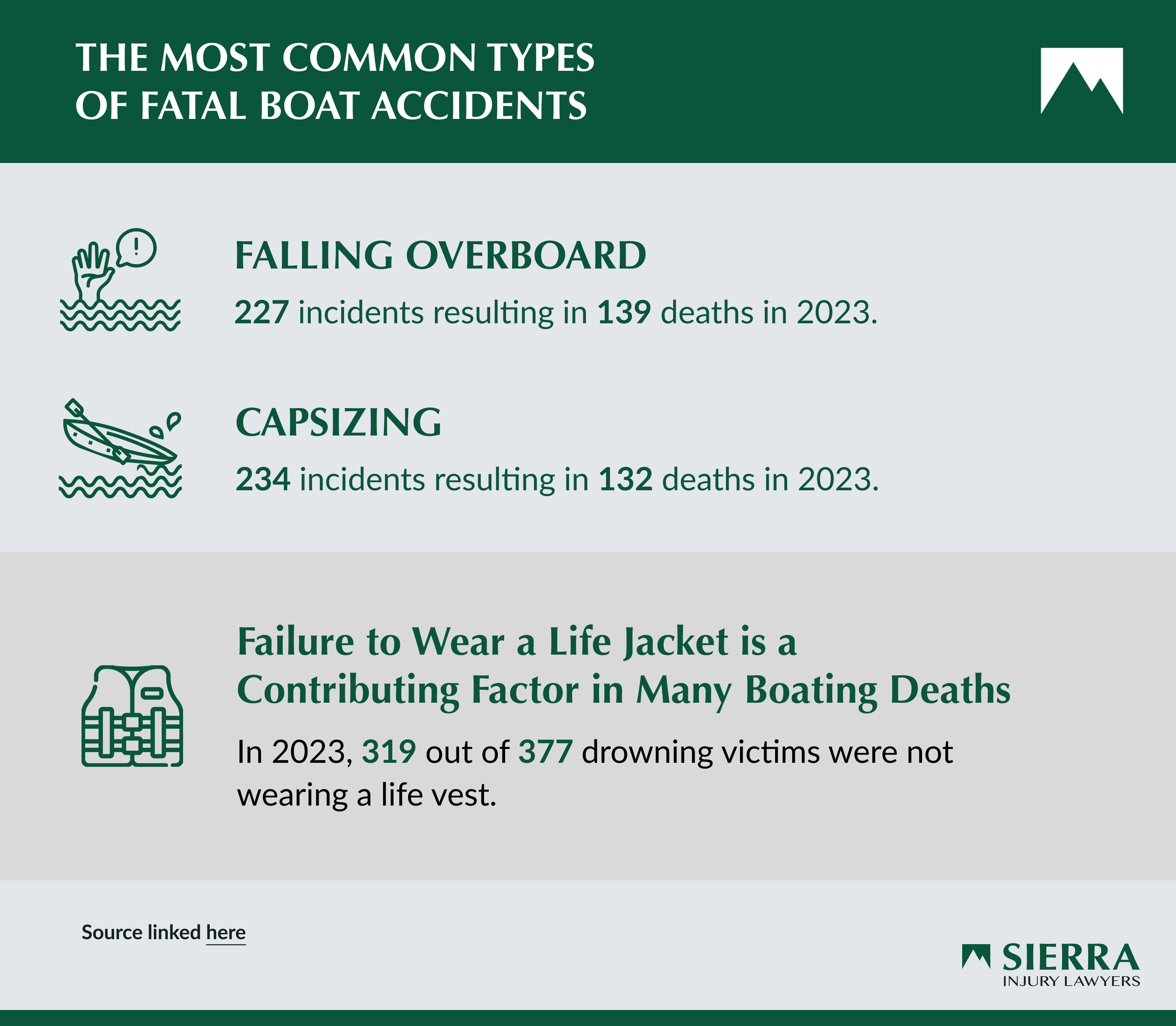
Failing to wear a life jacket or personal flotation device is also a substantial contributing factor that raises the risk of accidental drowning. In fact, 86% of drowning victims were not wearing a personal flotation device.
What Types of Boating Accidents Cause the Most Fatalities?
Most boating accidents in the United States involve collisions. In 2024, the USCG recorded 929 collisions with fixed objects, leading to 69 deaths. Meanwhile, there were 747 collisions with other vessels, which resulted in 43 deaths. Despite how common these types of accidents are, however, they are not the deadliest.
That same year, there were 239 incidents in which a person fell overboard and 202 in which the boat capsized.
Instead, falling overboard was the single largest cause of boating deaths, with 138 deaths resulting from just 239 of these accidents. This type of accident is followed closely by capsizing—when a boat rolls over in the water—which led to a total of 111 fatalities across 202 recorded incidents.
What Types of Boats Are the Most Dangerous?
Certain watercraft are safer than others. While someone can fall overboard from any type of boat and drown, this is more likely to occur with open motorboats, canoes, and kayaks. In 2023, a total of 255 people died, including 153 by drowning, in incidents involving open motorboats. Meanwhile, 114 people were killed in incidents involving kayaks and canoes, 98 of whom died by drowning.
Open motorboats, canoes, and kayaks share some similarities that make them especially dangerous. When these vessels encounter choppy, rough waters, they are likely to rock, roll, or buck. Because occupants are not enclosed in a cabin (as they may be in larger boats), they are at risk of being thrown overboard.
Safe Boating Practices to Remember
On the water, boating safety is everyone’s responsibility. You can have an enjoyable and safe boating experience, provided you and your passengers follow these simple safety tips:
- Everyone should wear a life jacket, no matter how good a swimmer they are
- If you do consume alcohol, do so in moderation and never operate the boat under the influence of alcohol or drugs
- Obey all signs and warnings, such as no-wake zones and speed limits
- Keep an eye on your surroundings at all times when operating your boat
- Pay attention to the weather and head to shore if bad weather or storms develop

If you plan to go boating often, consider taking a boating safety course. These courses last only a few hours but can provide you with potentially lifesaving tips.
What Happens When Someone Else’s Negligence Causes a Fatal Boating Accident?
Losing a loved one in a boating accident is a devastating experience, and the pain can feel even more overwhelming when the accident could have been prevented. When a fatal boating accident is caused by another person’s careless or reckless conduct, surviving family members may have the right to file a wrongful death claim.
A wrongful death claim is a civil lawsuit that allows certain family members to seek compensation when their loved one’s death was caused by someone else’s negligence. In the context of boating accidents, that negligence might take the form of an intoxicated boat driver, a vessel owner who failed to maintain safe equipment, or a reckless driver who ignored posted speed limits or no-wake zones.
Who can file a wrongful death claim depends on the state. In California, eligible parties typically include a spouse, domestic partner, children, or other dependents of the deceased. Nevada has similar provisions. If you are unsure whether you have the right to file, an experienced attorney can help you understand your options.
What Damages Can Families Recover After a Fatal Boating Accident?
No amount of compensation can undo the loss of someone you love. However, a wrongful death claim can help ease the financial burdens that often follow a tragedy and provide a measure of accountability for those responsible. Damages that may be available to surviving family members include:
- Funeral and burial expenses
- Medical costs incurred prior to death
- Lost income and financial support the deceased would have provided
- Loss of companionship, care, and guidance
The specific damages available to your family will depend on the circumstances of the accident and the laws of your state. An attorney can help you understand what you may be entitled to recover.
How a Boating Accident Lawyer Can Help
In the aftermath of a fatal boating accident, the last thing a grieving family should have to worry about is navigating the legal system alone. These cases can involve a complex intersection of maritime law, state law, and, in some cases, federal regulations, and building a strong claim requires thorough investigation and skilled legal advocacy.
An experienced boating accident lawyer can obtain Coast Guard or police reports, gather witness testimony, and identify all parties who may share responsibility for the accident. They can also handle all communications with insurance companies, which often attempt to minimize payouts to families who are already going through the hardest time of their lives. Having the right legal representation means your family can focus on healing while your attorney fights for the full compensation you deserve.
If You Were Involved in a Boating Accident, Porter Simon Sierra Injury Lawyers is Here to Help
If you have lost a loved one in a boating accident in Lake Tahoe, Stampede Reservoir, Boca Reservoir, Jackson Meadows Reservoir, Bullards Bar, Englebright Lake, Rollins Reservoir, Bucks Lake, or elsewhere in California or Nevada, no words can adequately describe the pain of that loss. When that loss is the result of another person’s negligence, you have the right to seek justice and compensation through a wrongful death claim.
The boat accident lawyers at Porter Simon Sierra Injury Lawyers are skilled professionals capable of investigating your case, identifying liable parties, and filing a claim on your behalf. We also represent those who have been injured in boating accidents and are seeking compensation for their losses. Contact us to request a free case evaluation.